Conway's Law, Trends, A Tile Customizer


Conway's Law
Melvin Conway was a computer scientist and in 1967 observed that organizations design systems that work the way they communicate. The systems themselves look like the hierarchies that created them.
Organizations which design systems (in the broad sense used here) are constrained to produce designs which ae copies of the communication structures of these organizations. — Melvin E. Conway, How Do Committees Invent?
If a team works independently, their final product can feel disjointed. This could be divisions within a company creating unnecessary layers of software, or forms with repetitive fields, or disconnected experiences.
The other side of this is that you can also improve the product simply by improving communication within your organization. Teams start collaborating more and it's felt in the final experience ("Hey! Someone really thought through this.")
Why does this matter to web design
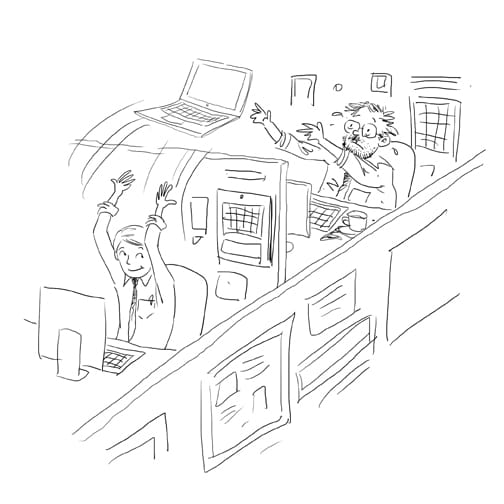
A classic pattern in design and development is over-the-wall design. A designer works with the client to create mockups and an entire design system then passes the project off to a developer. Best case scenario the designer includes lots of notes and the developer emails questions to the designer.
How we do it differently
Our design and development is literally married, which creates a rare synthesis. There's endless opportunities for Lauren to ask if something she designs will code cleanly, and same for opportunities to clarify what she intended for a specific design element.
Often we have over-the-shoulder sessions where I code updates while Lauren makes requests looking over my shoulder. This is especially useful for small tweaks like hover states for buttons and links. The end result is cohesiveness, a site where all the little things make sense.
Trends we're seeing
High effort = high value
Big brands are choosing mediums where the effort is the message — stop motion, claymation, stained glass. The problem with AI isn’t just that it looks wrong, which it does, but that it looks lazy. We associate high effort with high value. So, the details matter, but they matter because you took the time to tend to them.
We're going to see more of this "effort signaling" content, even as AI output improves -Miranda Shanahan (tiktok)
One way of interpreting this is “no rest for the weary,” even more work for a small business owner. But our more hopeful view is that you don’t have to keep up with generative AI, that your audience will still appreciate your efforts and, in fact, maybe appreciate them more, simply because they’re effortful.
End of the influencer era
There is a shift from attention to credibility; to guides, storytellers, and experts.
We moved from following people who had everything we wanted to following people who actually know something. -Ioana Iliesiu (tiktok)
Call it quality over quantity, but in the social media space. This trend might be amplified even more by the recent Meta settlement in which they agreed to limit features (e.g. number of likes on a post) that stoke mental health issues for children.
Again, our takeaways is "keep doing what you're doing." If your work is authentic, there are building trends and structural changes that will reward it.
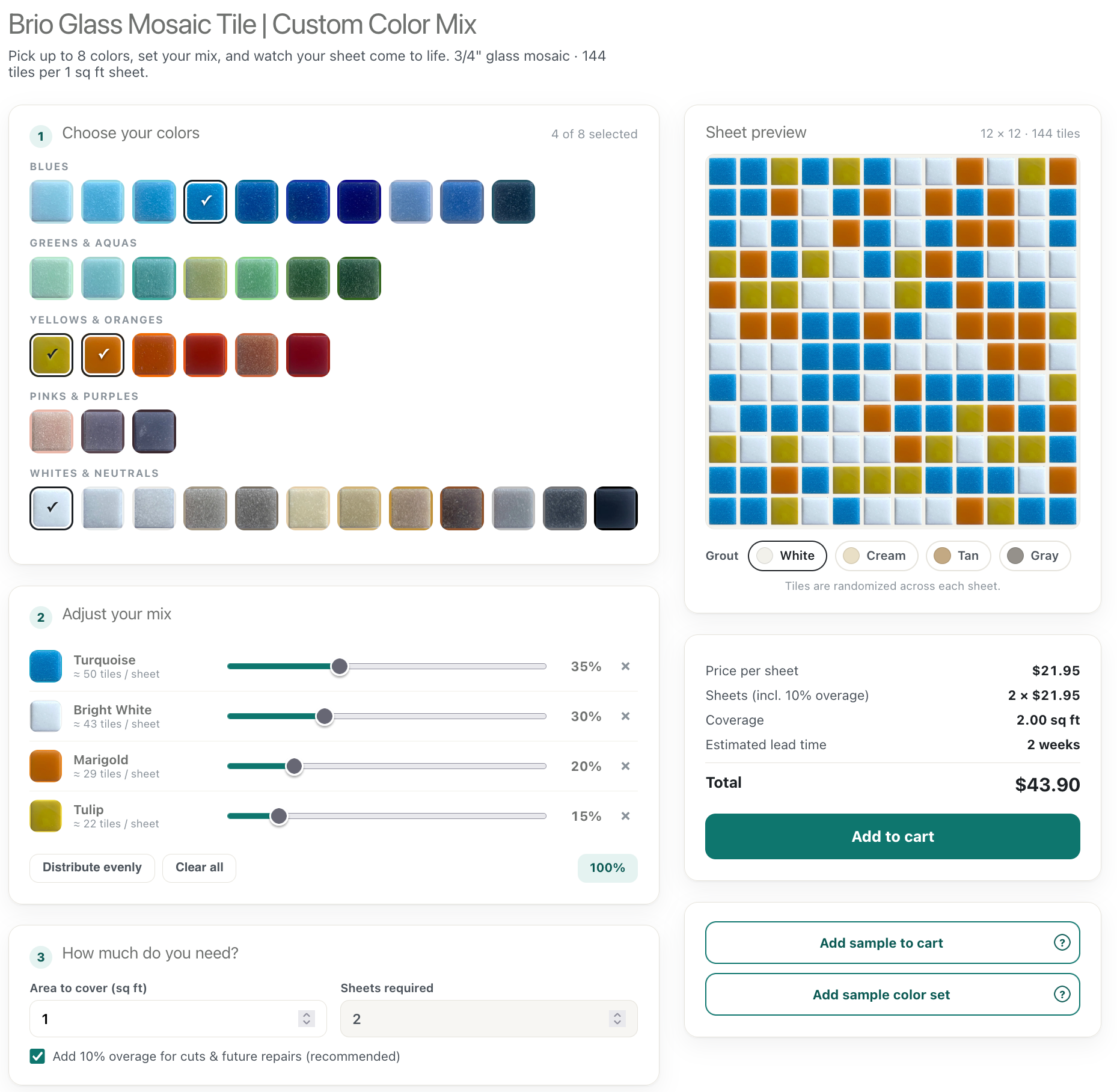
We're so excited about this live preview customizer
Modwalls asked us to build an app that would make their custom tile feature easier to use. We're so stoked with the final product – it's so fun to play around with.
We made the colors easier to select and to adjust the percentages, used images instead of simple color representations, and added options to more easily purchase samples. Now, everywhere we look we see a surface that needs tile. Try it out!